Easy Gingerbread Cheesecake Recipe with Molasses Mousse for Cozy Holiday Baking
This gingerbread cheesecake recipe layers a spiced, molasses-rich filling over a buttery shortbread crust, then tops it with a soft molasses mousse and a cloud of whipped cream. It takes about an hour of hands-on time, bakes low and slow for a crack-free top, and needs to chill overnight, so it’s a perfect make-ahead holiday dessert recipe.
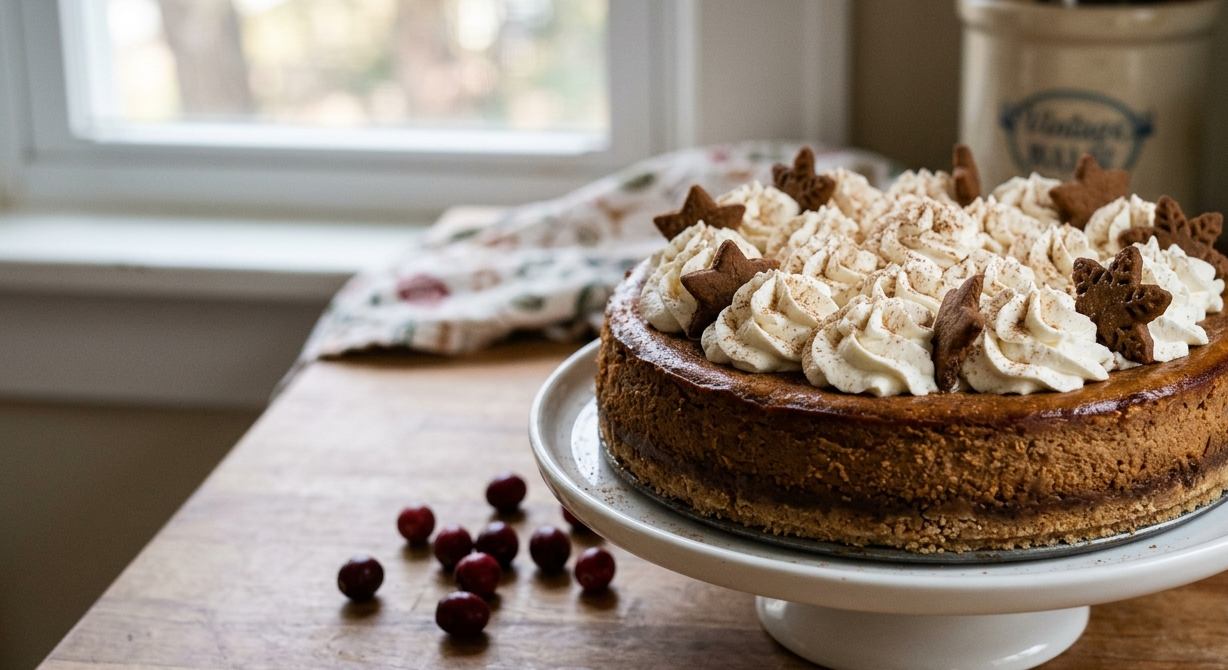
Cozy gingerbread flavor meets creamy cheesecake in every slice, and the molasses mousse on top makes it feel like a bakery-case showstopper without any fancy skills. It’s rich, warm-spiced, and the kind of dessert people ask you to bring again next year.
My favorite part about this one is that almost all of it happens the day before. You bake it, chill it, add the mousse layer, chill it again, and by the time your guests show up, all that’s left to do is pipe on the whipped cream.
Why You’ll Love This Recipe
- Rich, creamy gingerbread cheesecake filling with real molasses and warm spices, not just a sprinkle of cinnamon
- Buttery shortbread crust instead of a plain graham crust — it actually tastes like something
- A soft molasses mousse layer on top adds a second texture without any extra baking
- Make-ahead friendly — most of the work happens the day before you need it
- Bakes low and slow so you don’t have to fight cracks
- Looks like a bakery dessert but every step is simple and forgiving
Ingredients
For the shortbread crust:
- 1 3/4 cups (255g) shortbread cookie crumbs (about two 5.3 oz packages)
- 1 tbsp sugar
- 3/4 tsp cinnamon
- 2 tbsp (28g) butter, melted
For the gingerbread cheesecake filling:
- 24 oz (678g) cream cheese, softened — cold cream cheese won’t fully smooth out and leaves lumps baked into the filling
- 1 cup (225g) packed light brown sugar
- 3 tbsp (25g) all-purpose flour
- 3/4 cup (173g) sour cream
- 1/4 cup (60ml) molasses
- 1 tsp vanilla extract
- 2 tsp ground ginger
- 1 1/2 tsp ground cinnamon
- 1 tsp ground nutmeg
- 1/2 tsp ground cloves
- 4 large eggs, room temperature
For the molasses mousse:
- 1 1/4 cups (300ml) heavy whipping cream
- 1/2 cup (58g) powdered sugar
- 3 tbsp (45ml) molasses
- 3/4 tsp ground cinnamon
- 1/4 tsp ground nutmeg
- 8 oz (226g) cream cheese, softened
For the whipped cream topping:
- 3/4 cup (180ml) heavy whipping cream
- 6 tbsp (44g) powdered sugar
- 1/2 tsp ground cinnamon
- 1/2 tsp vanilla extract
For decorating (optional): a few small gingerbread cookies or gingerbread men
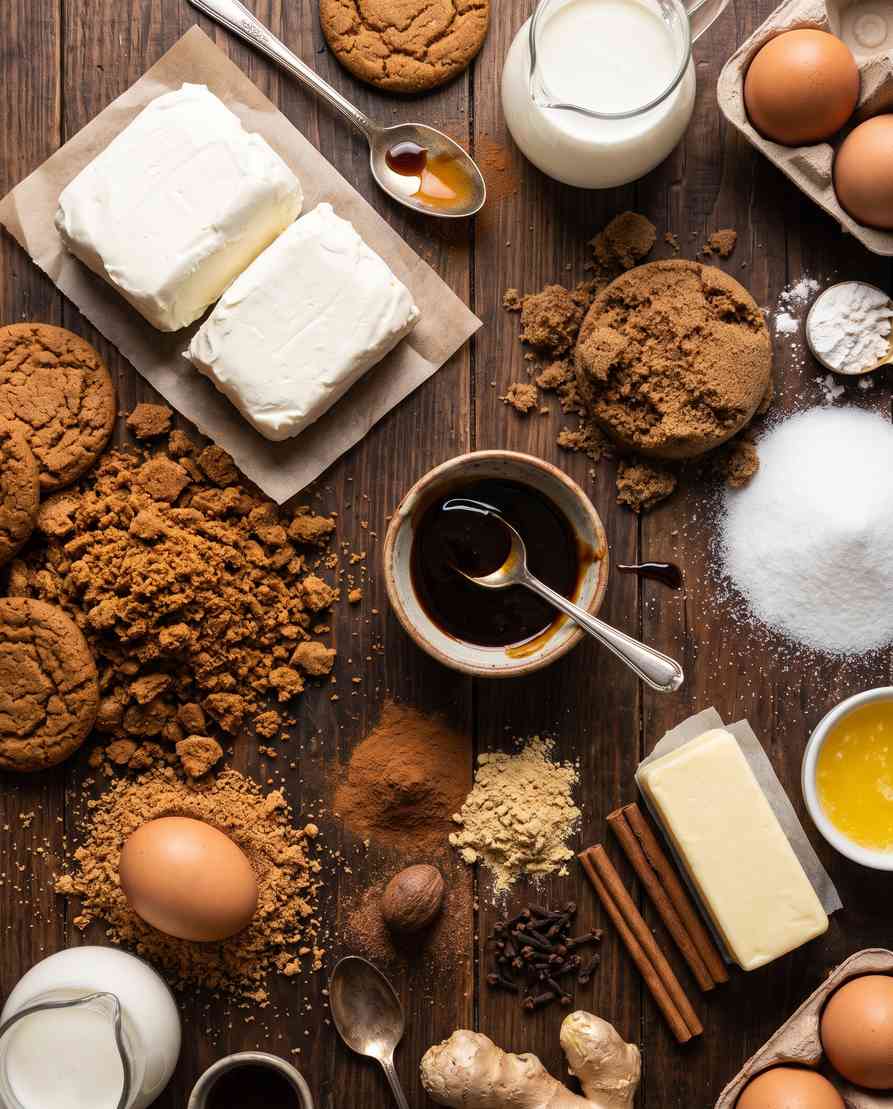
Ingredient Notes and Substitutions
- Cream cheese: full-fat, block-style cream cheese is what gives this its structure. The lower-fat tubs are softer and can leave the filling looser, so it won’t set as firmly even after a full chill.
- Molasses: regular (unsulphured) molasses is what gives this its deep color and flavor. Blackstrap molasses is more bitter and much stronger — it will overpower the spices if swapped in directly.
- Shortbread crumbs: any plain shortbread cookie works crushed into crumbs. Gingersnaps are a common swap, but they add more spice and a bit more sweetness, so you may want to cut back the cinnamon in the crust slightly if you go that route.
Step-by-Step Instructions
Step 1: Make the Shortbread Crust
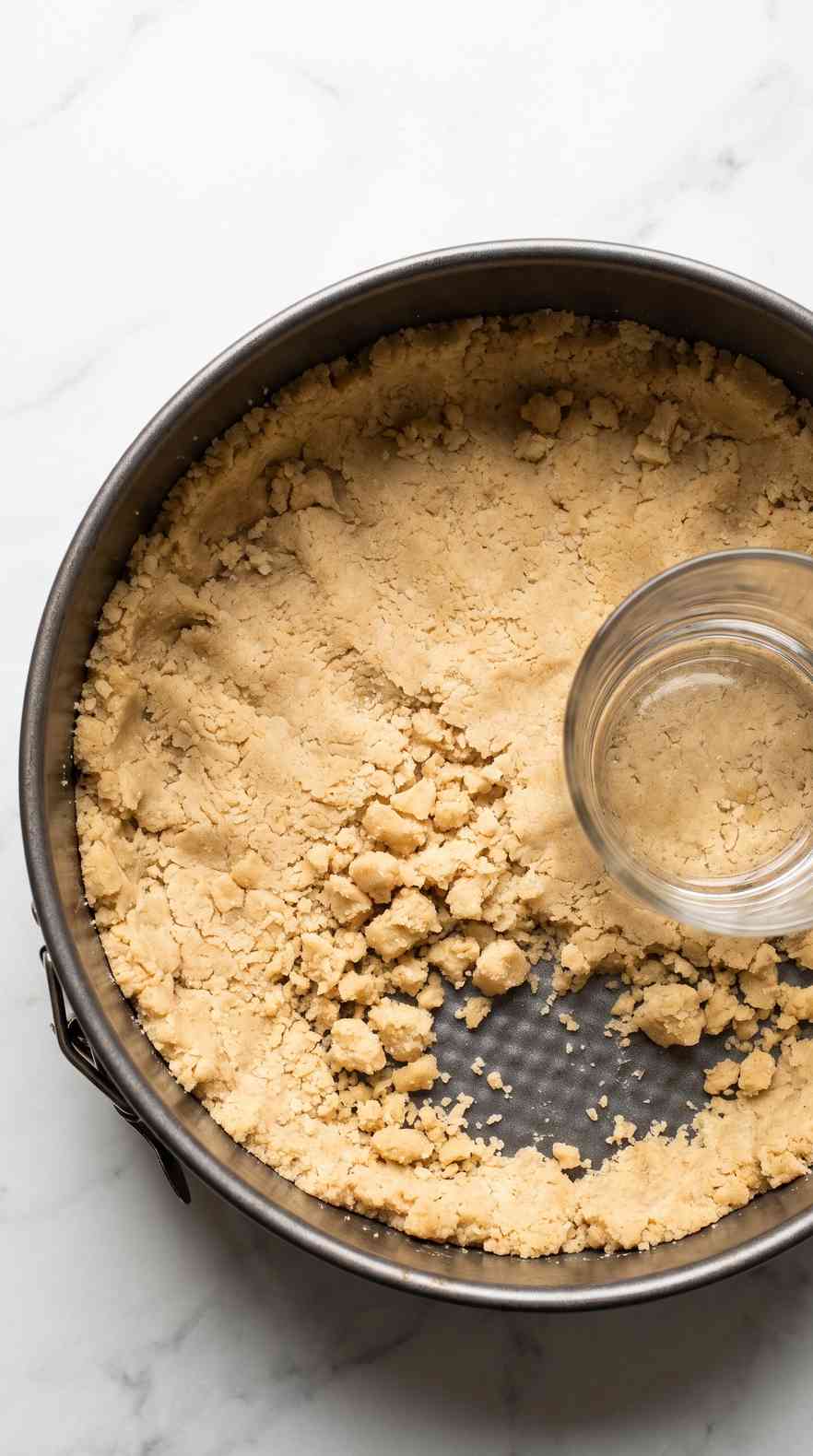
Preheat your oven to 325°F (163°C). Line the bottom of a 9-inch springform pan with parchment paper and grease the sides. Mix the shortbread crumbs, sugar, cinnamon, and melted butter until it looks like damp sand, then press it firmly into the bottom and slightly up the sides of the pan. Bake for 10 minutes, then set it aside to cool while you make the filling.
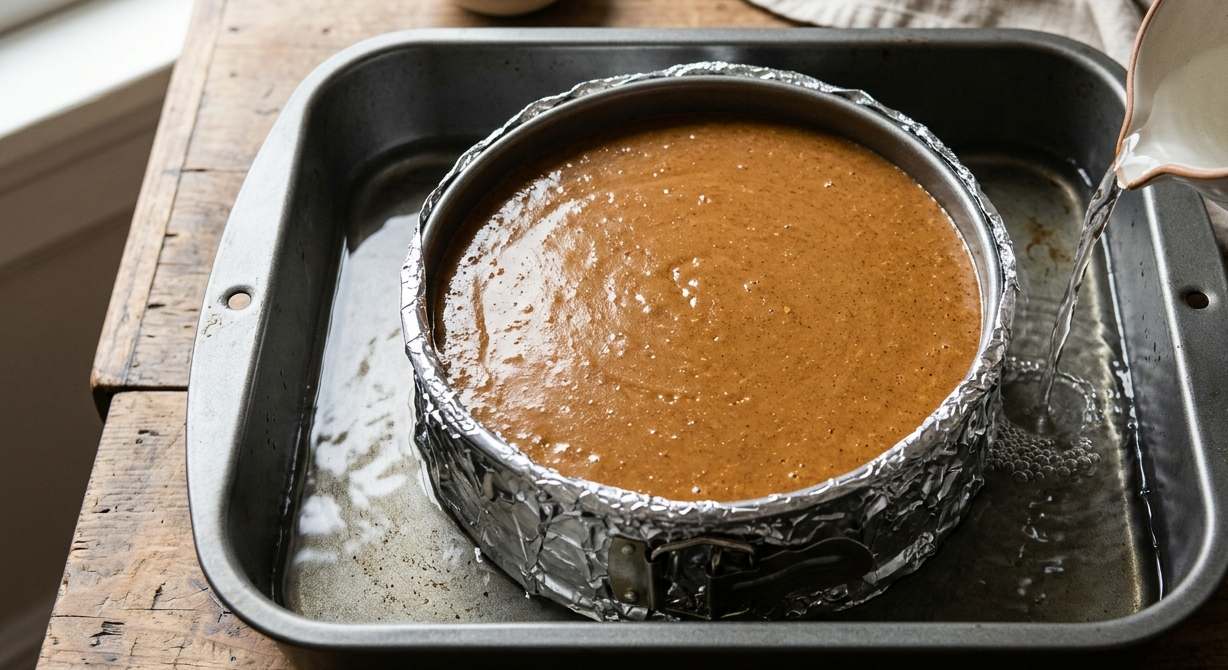
Once the crust has cooled, wrap the outside of the pan tightly in two layers of heavy-duty foil. This is the step people skip and regret — if there’s any gap in the foil, water from the bath can seep in and turn your crust soggy. If you’ve had a springform pan leak on you before, a reusable silicone baking bag or oven bag slipped around the pan works even better than foil and takes the guesswork out of it completely.
Step 2: Mix the Filling on Low Speed
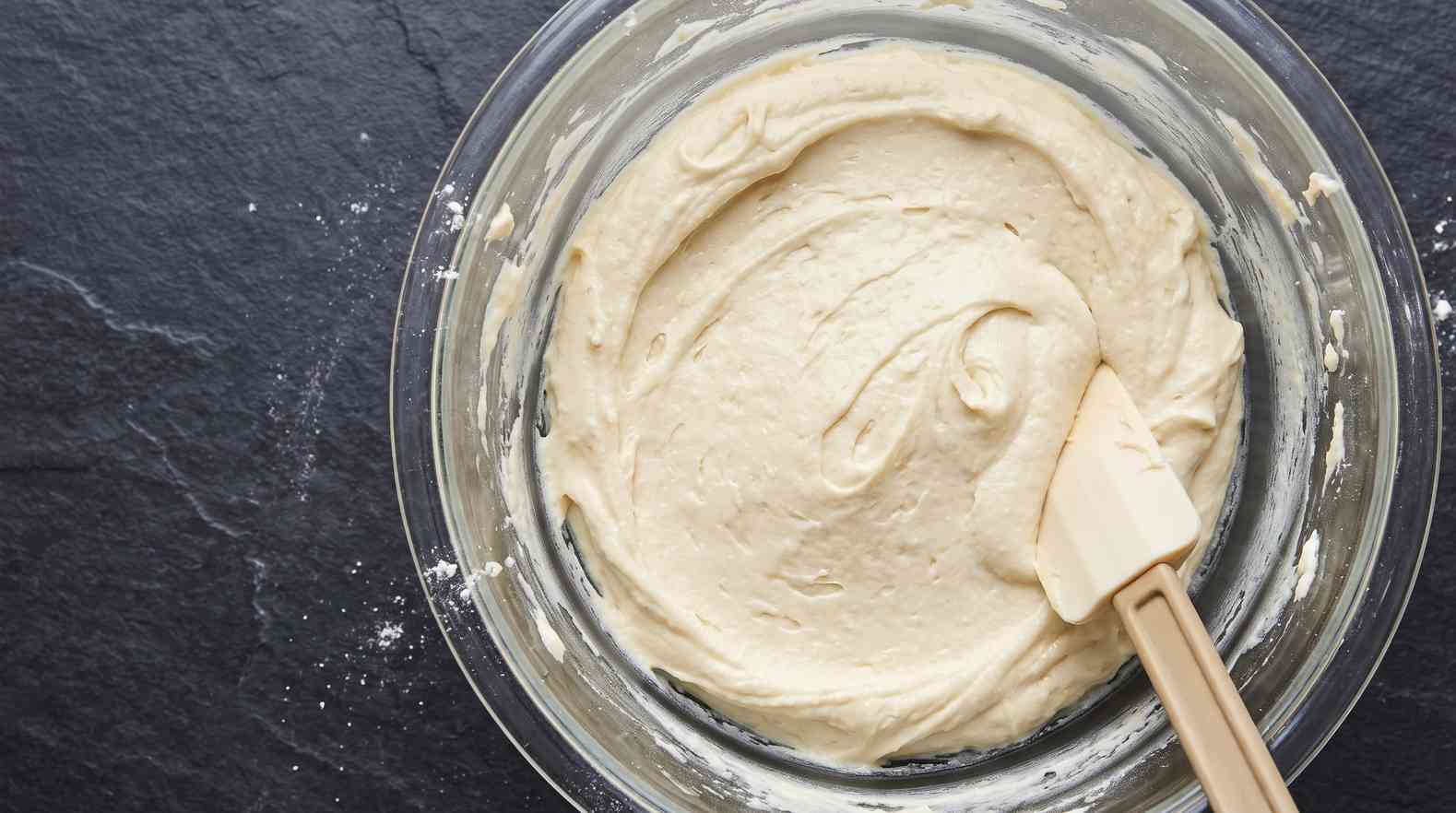
Lower the oven temperature to 300°F (148°C). Beat the cream cheese, brown sugar, and flour together on low speed until smooth, scraping down the sides of the bowl as you go.
This is the step that decides whether your cheesecake cracks. The filling will never look light and fluffy the way cake batter does, and trying to get it there by beating on a higher speed just whips extra air into the batter. That trapped air is what expands in the oven and splits the top as the cheesecake cools. Keep the mixer on low the whole time, even though the batter looks dense and heavy. That’s exactly what it should look like.
Step 3: Add the Wet Ingredients and Spices
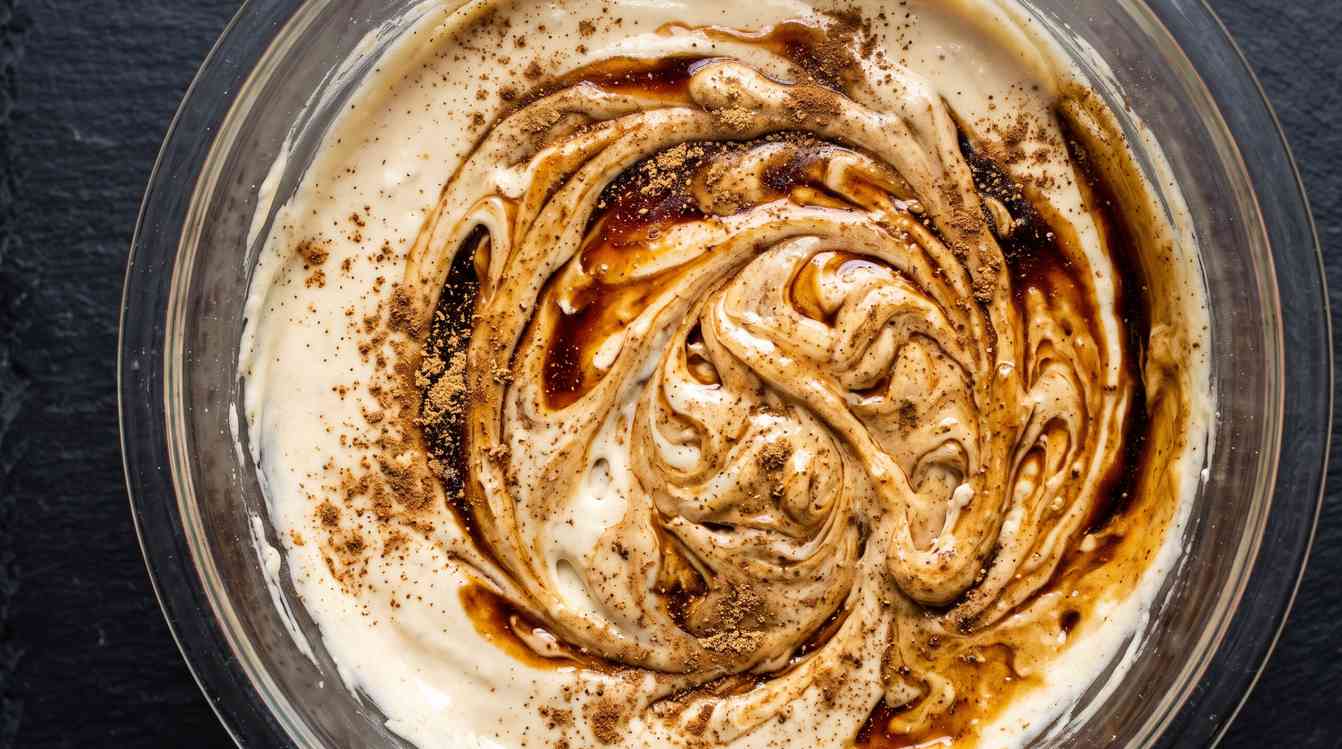
Mix in the sour cream, molasses, vanilla, ginger, cinnamon, nutmeg, and cloves on low speed until just combined. Scrape the bowl well here, since molasses likes to cling to the bottom and sides.
Step 4: Add the Eggs One at a Time
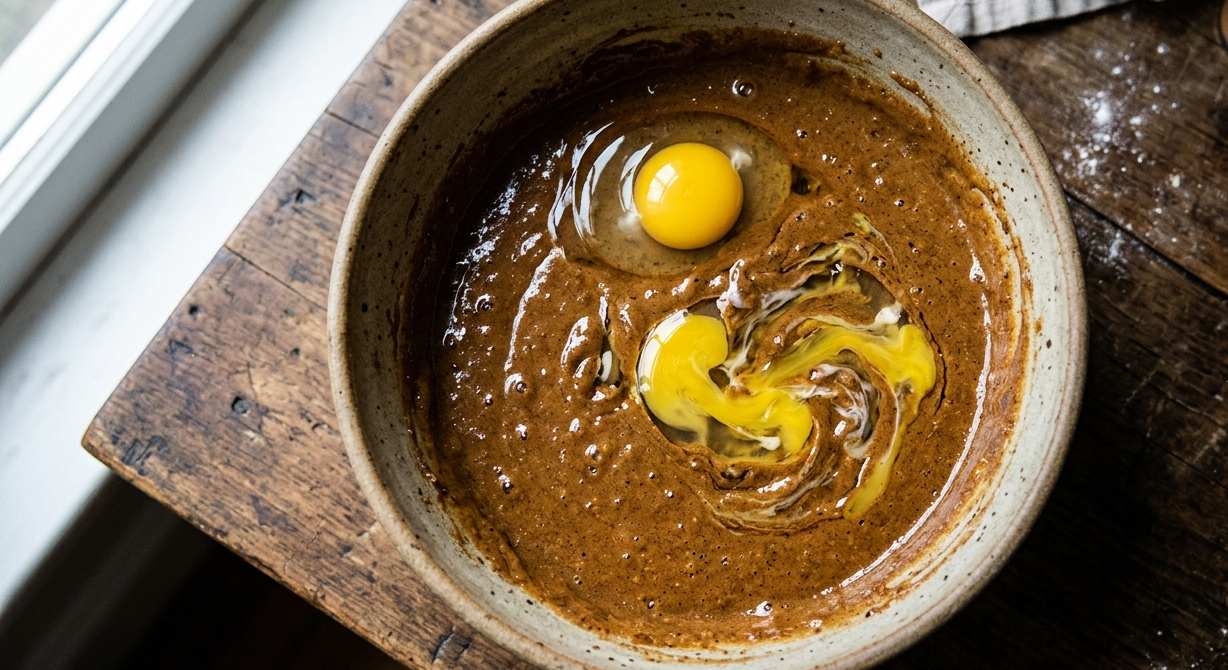
Add the eggs one at a time, mixing on low speed and scraping the bowl after each addition. Adding them one at a time (not all at once) keeps the batter from getting overworked, which is another common cause of cracking.
Step 5: Bake in a Water Bath
Pour the filling over the cooled crust and smooth the top. Set the foil-wrapped springform pan inside a larger roasting pan, then pour warm water into the outer pan until it comes about halfway up the sides of the springform — keep it below the top edge of the foil. Bake for 1 hour and 20 minutes.
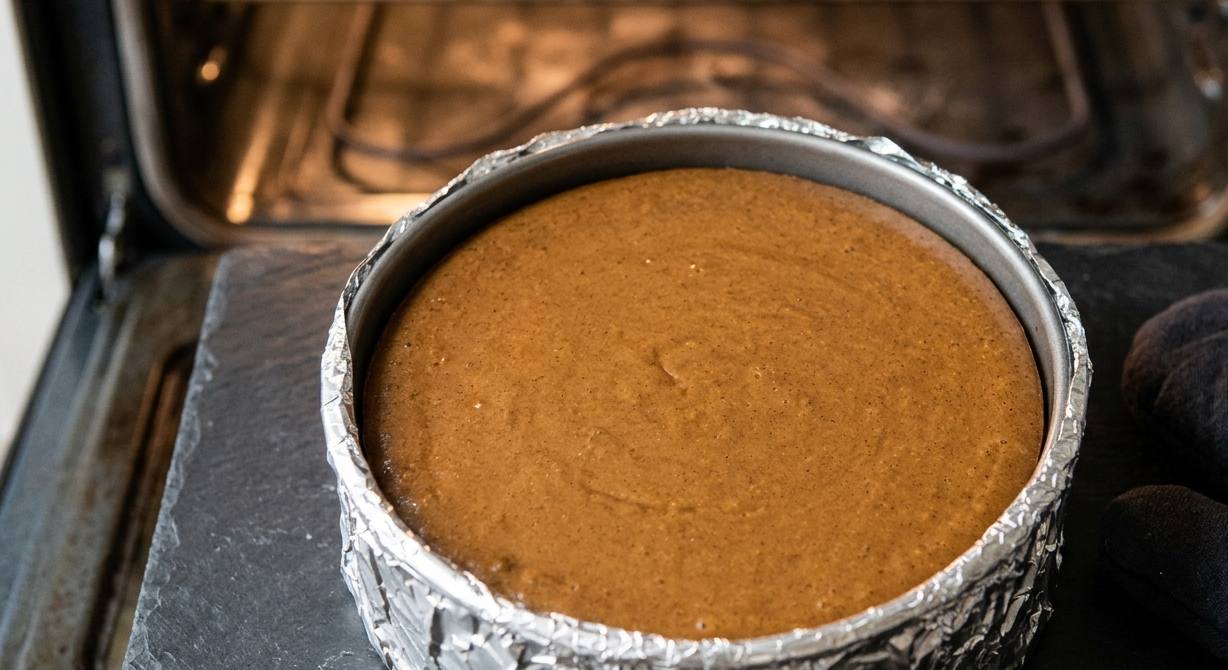
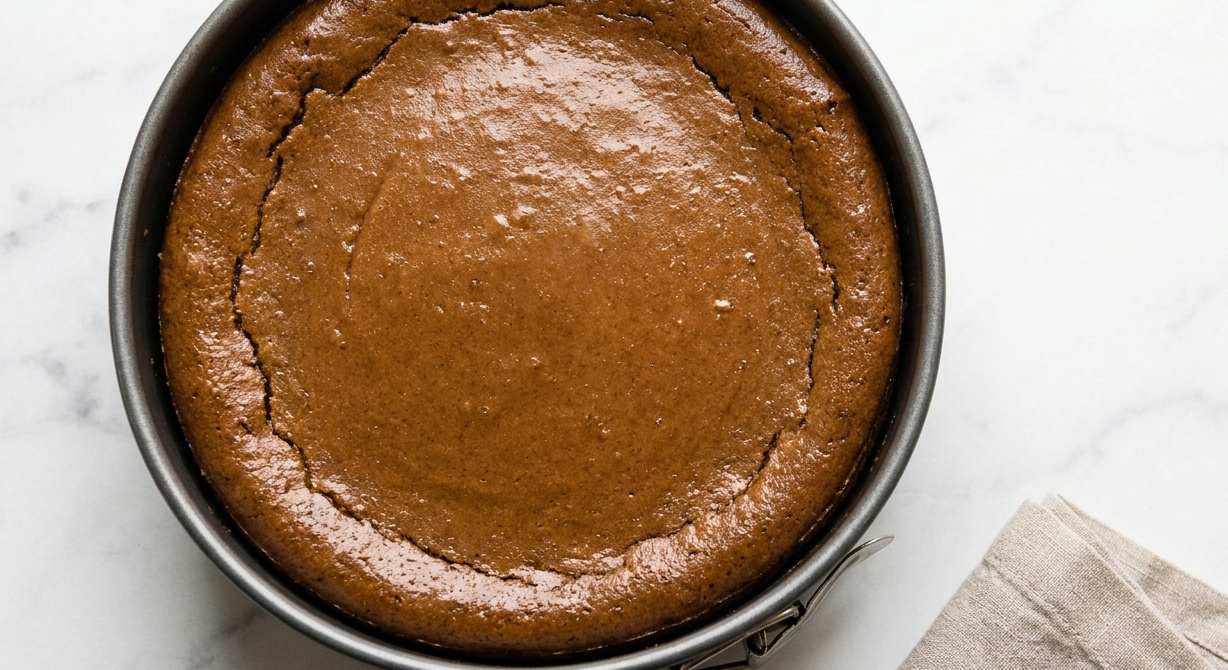
The center should still look slightly jiggly when the baking time is up, like a not-quite-set gelatin. It will look underdone, but it firms up completely as it cools and chills, so don’t bake it until it looks fully set or you’ll end up with a dry cheesecake.
Step 6: Cool It Slowly
Turn off the oven and leave the cheesecake inside with the door closed for 30 minutes. Then crack the oven door open a few inches and let it sit for another 30 minutes before taking it out. This gradual temperature drop is what keeps the top from cracking as it cools — pulling a hot cheesecake straight into room-temperature air is a shock that splits the surface almost every time.
Step 7: Chill Until Firm
Remove the cheesecake from the oven and refrigerate it, still in the springform pan, for 5-6 hours or overnight. It needs to be fully firm and cold before you add the mousse layer, or the two layers will run together.
Step 8: Make the Molasses Mousse
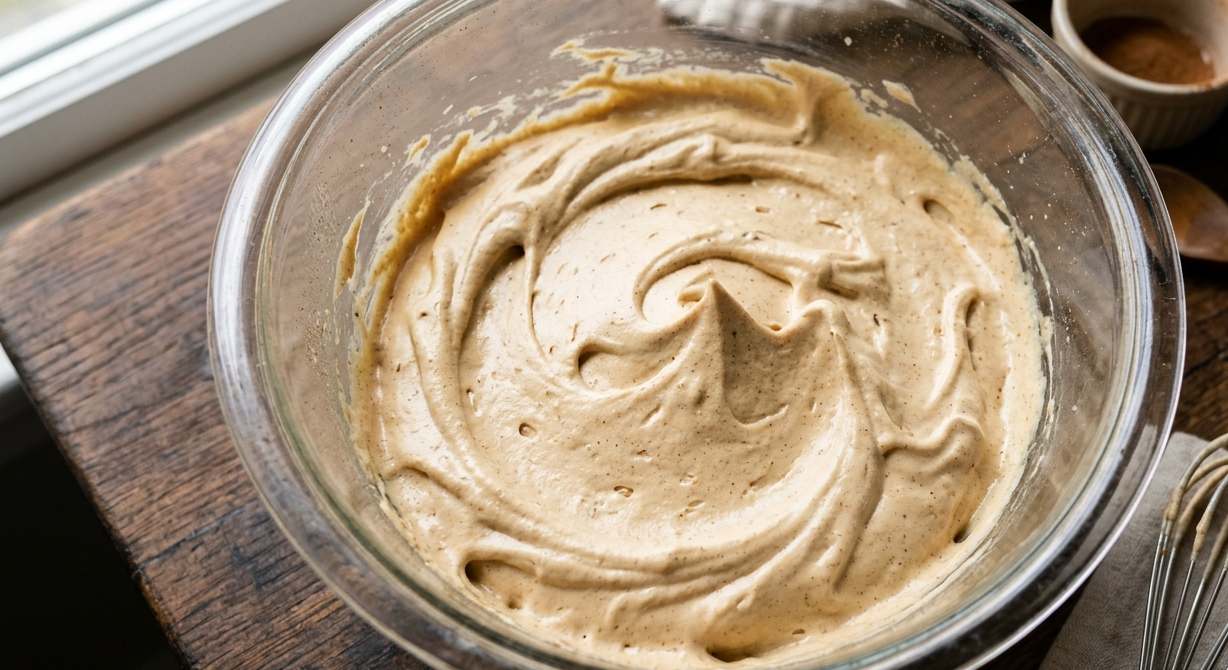
Once the cheesecake is firm, whip the heavy cream, powdered sugar, molasses, cinnamon, and nutmeg together until stiff peaks form. In a separate bowl, beat the 8 oz of cream cheese until completely smooth, then fold the whipped cream into it in two additions, folding gently so you don’t deflate it.
Step 9: Add the Mousse Layer
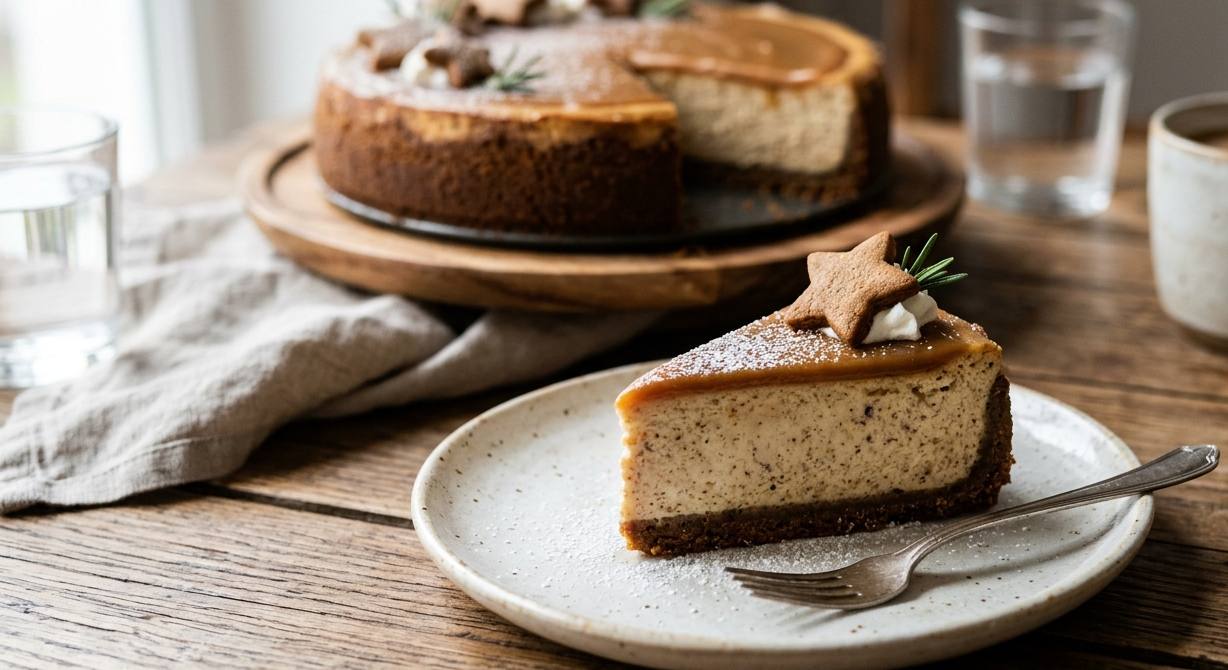
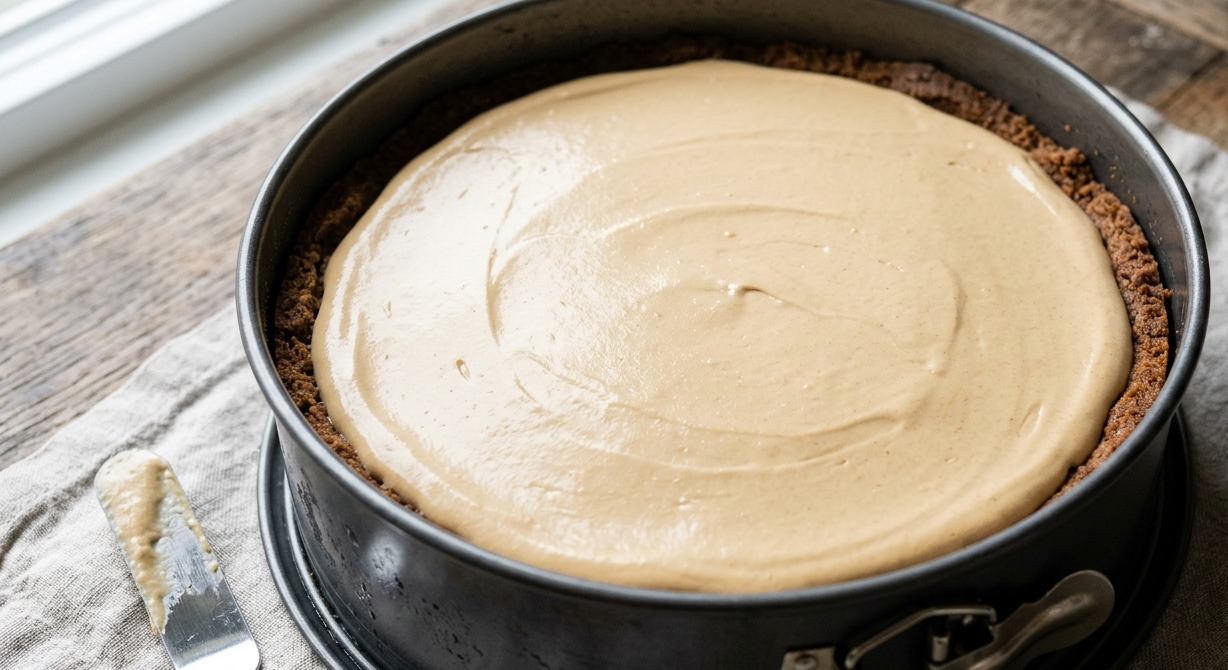
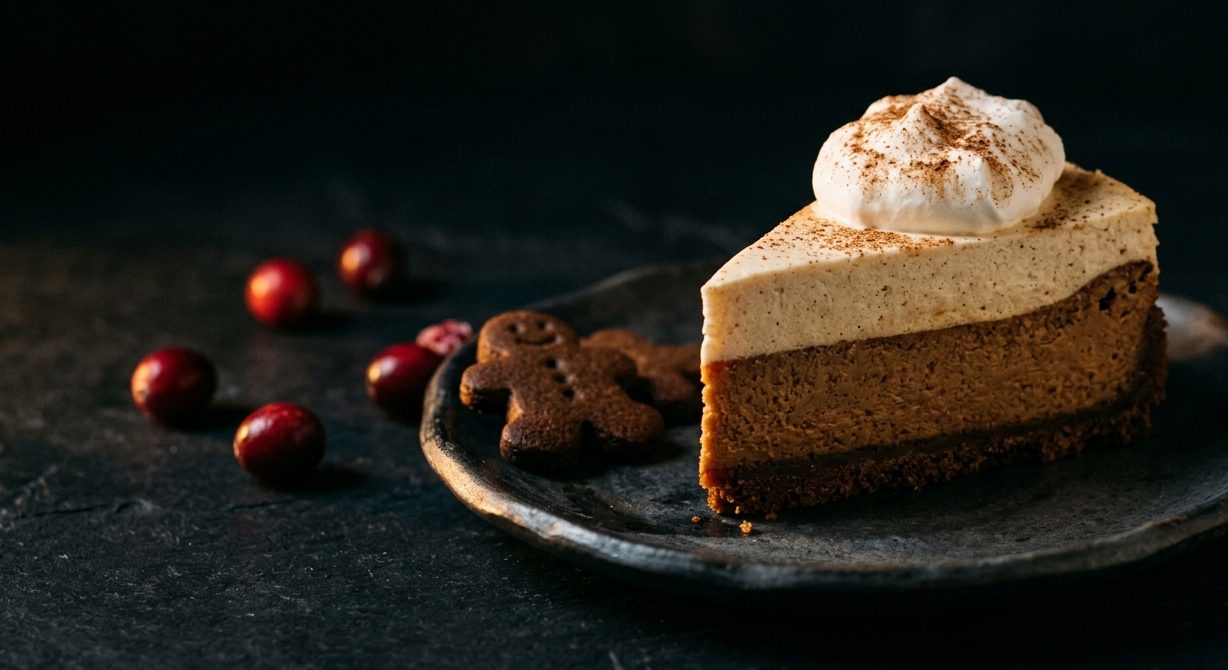
With the cheesecake still inside the springform pan, spread the mousse evenly over the top. Keeping it in the pan while you add this layer is what keeps the edges clean and even. Refrigerate for 1-2 hours, until the mousse is firm enough to hold its shape, then run a thin knife around the edge and remove the sides of the pan.
Step 10: Make the Whipped Cream Topping and Serve
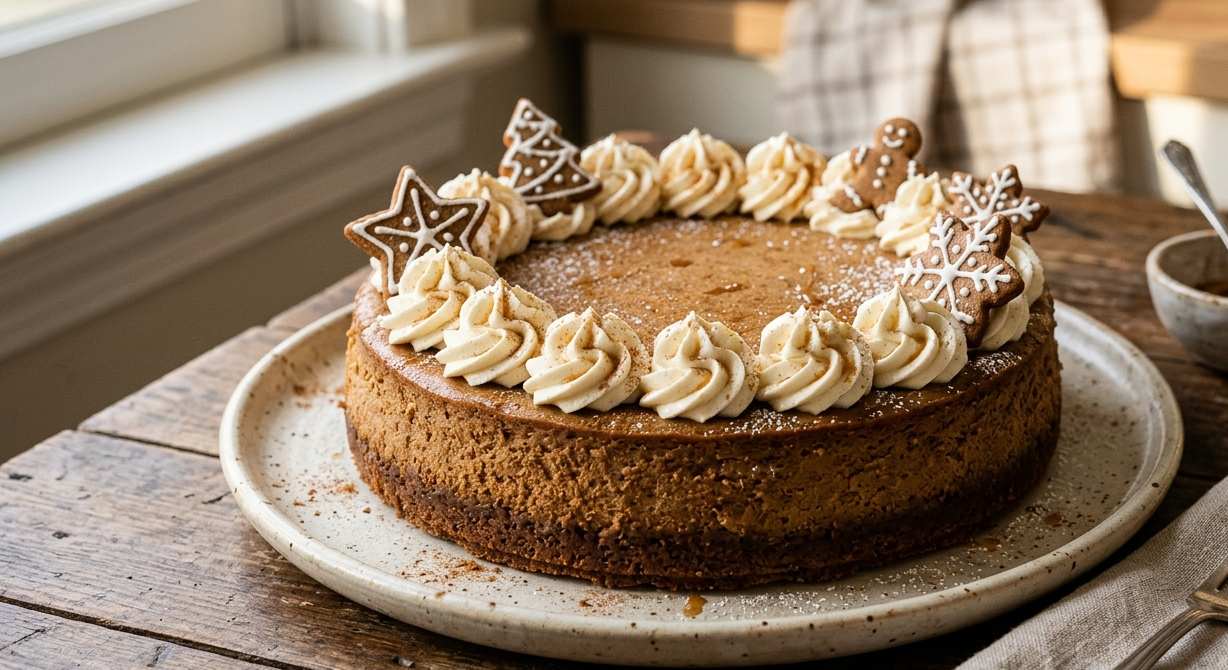
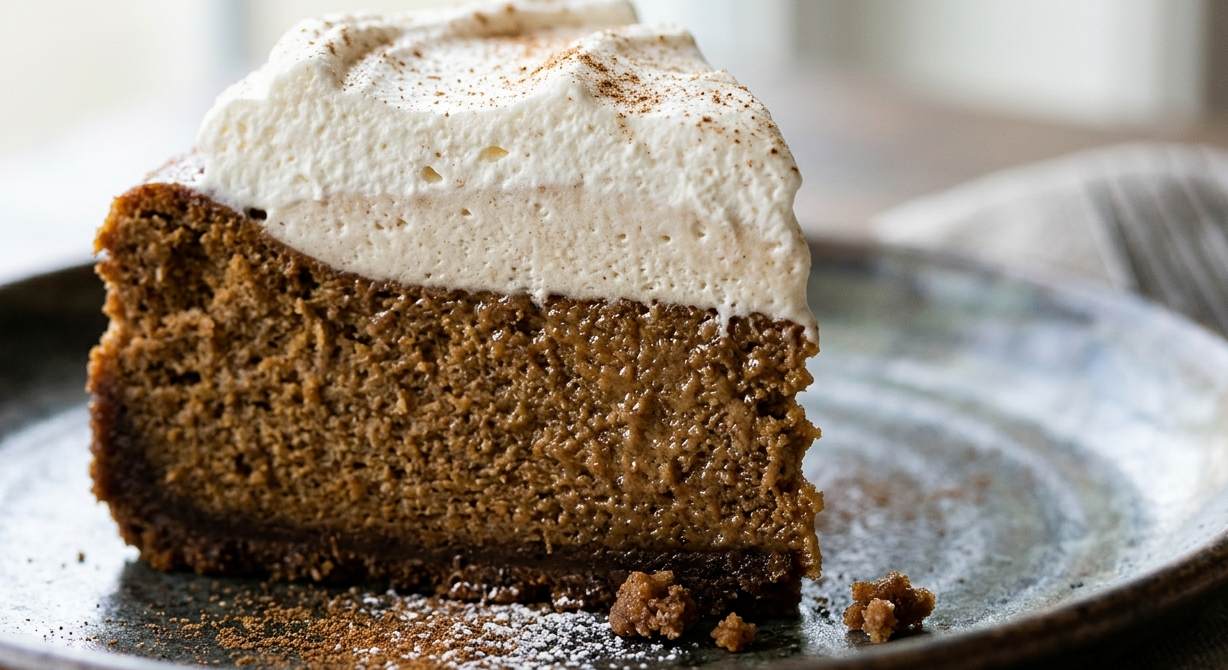
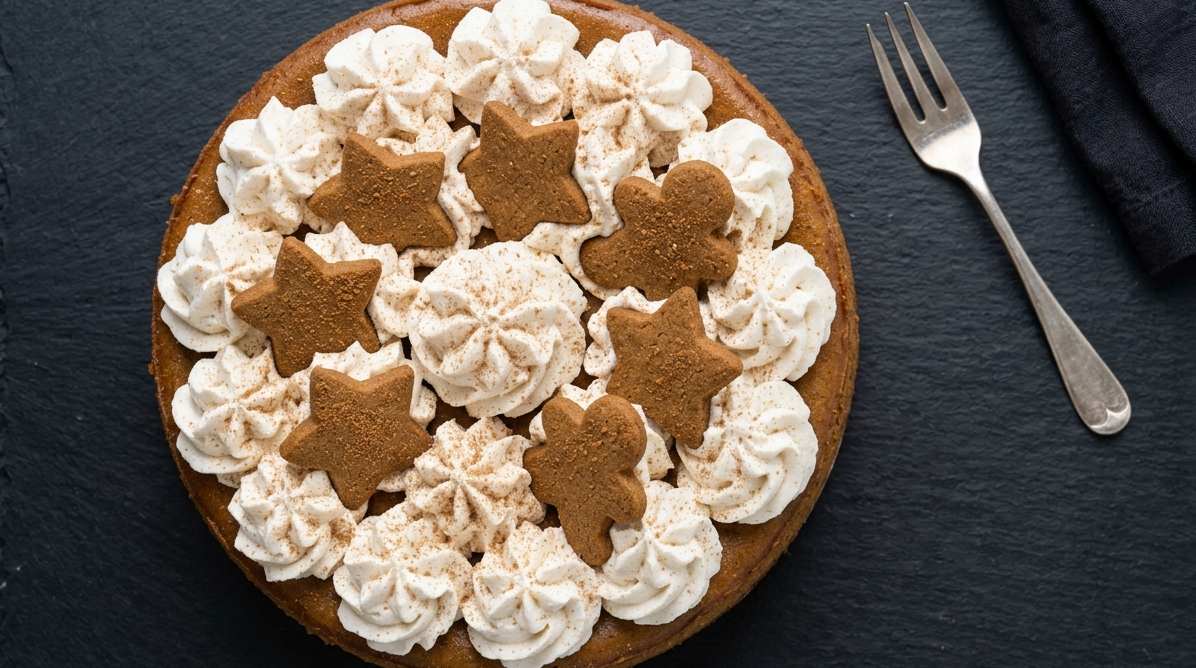
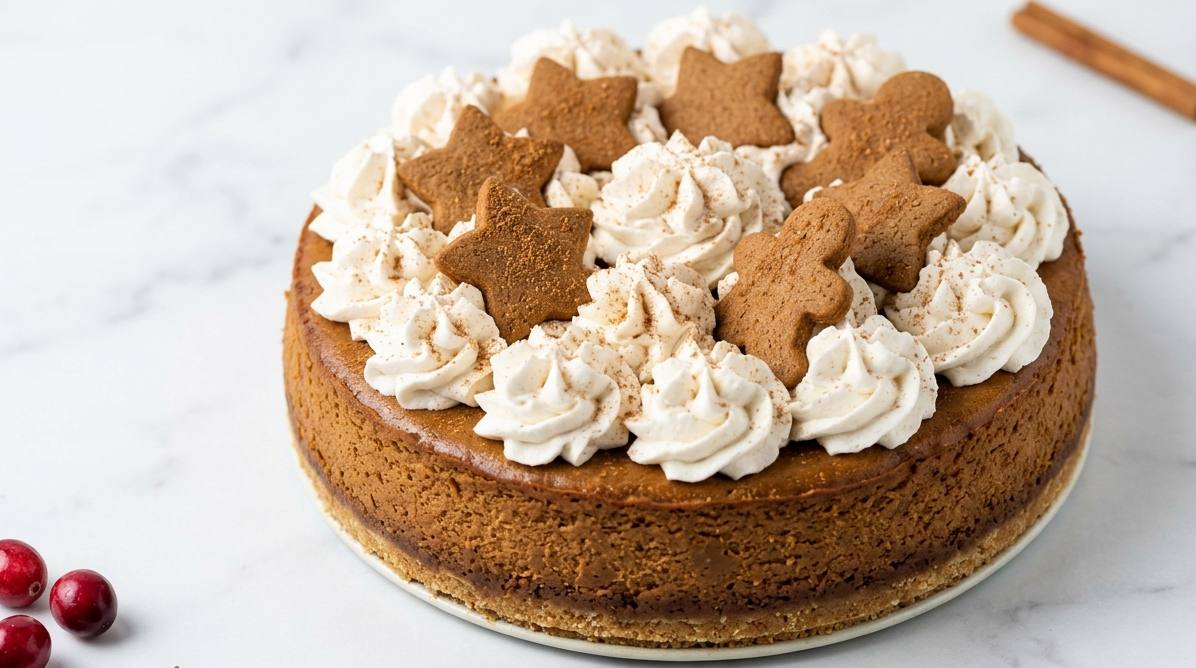
Whip the remaining cream, powdered sugar, cinnamon, and vanilla until stiff peaks form. Pipe it around the top edge of the cheesecake, add a few small gingerbread cookies if you’re decorating, and keep it refrigerated until you’re ready to serve.
Tips for the Best Results
- Keep every mixing step on low speed, from the filling through the eggs — this is the single biggest factor in whether the top cracks
- Don’t skip the gradual cooling step (oven off, then door cracked) — it matters as much as the water bath does
- Make sure the cheesecake is fully chilled and firm before adding the mousse layer, or the layers will blend into each other instead of staying distinct
- This cheesecake is genuinely better the next day, once all the layers have had time to firm up and the flavors settle, so making it the day before you serve it isn’t just convenient, it’s the better result
What to Serve With It
- A simple gingerbread thumbprint cookie on the side keeps the gingerbread theme going without repeating the cheesecake texture
- Hot coffee or a spiced chai cuts through the richness nicely
- A small scoop of pecan pie cheesecake bars if you want a holiday dessert spread with more than one option

Gingerbread Cheesecake
Ingredients
Method
- Preheat your oven to 325°F (163°C). Line the bottom of a 9-inch springform pan with parchment paper and grease the sides. Mix the shortbread crumbs, sugar, cinnamon, and melted butter until it looks like damp sand, then press it firmly into the bottom and slightly up the sides of the pan. Bake for 10 minutes, then set it aside to cool. Once cooled, wrap the outside of the pan tightly in two layers of heavy-duty foil (or use a silicone/oven bag) so water from the bath can’t seep in.
- Lower the oven to 300°F (148°C). Beat the cream cheese, brown sugar, and flour on low speed until smooth, scraping the bowl as you go. Keep the mixer on low the whole time — higher speed whips in air that causes cracking as the cheesecake bakes and cools.
- Mix in the sour cream, molasses, vanilla, ginger, cinnamon, nutmeg, and cloves on low speed until just combined, scraping the bowl well.
- Add the eggs one at a time on low speed, scraping the bowl after each addition, to avoid overworking the batter.
- Pour the filling over the crust and smooth the top. Set the wrapped pan in a larger pan with warm water halfway up the sides, below the foil line. Bake 1 hour 20 minutes. The center should still look slightly jiggly — it firms up as it cools.
- Turn off the oven and leave the cheesecake inside with the door closed for 30 minutes, then crack the door and leave it another 30 minutes before removing. This gradual cooling prevents cracking.
- Refrigerate, still in the pan, for 5-6 hours or overnight, until completely firm.
- Whip the heavy cream, powdered sugar, molasses, cinnamon, and nutmeg to stiff peaks. In a separate bowl beat the cream cheese smooth, then fold in the whipped cream in two additions.
- With the cheesecake still in the pan, spread the mousse evenly over the top. Refrigerate 1-2 hours until firm, then remove the springform sides.
- Whip the remaining cream, powdered sugar, cinnamon, and vanilla to stiff peaks. Pipe around the top edge, decorate if desired, and keep refrigerated until serving.
Notes
Cool the cheesecake gradually (oven off, then door cracked) before chilling.
Make sure the cheesecake is fully firm before adding the mousse layer.
Nutrition is an estimate calculated from the ingredients and will vary with brands and portion size.
Make This Gingerbread Cheesecake Your New Holiday Tradition
This is the kind of dessert that looks like it took all day but really just takes patience. Most of that time is the fridge doing the work for you, not you standing at the counter.
Once you’ve made it once, you’ll see how forgiving it actually is. Keep the mixer slow, let it cool gradually, and the rest pretty much takes care of itself.
If you give this gingerbread cheesecake a try, I’d love it if you left a star rating and a comment below — it helps other readers know what to expect.
For more gingerbread recipes you will love: