Easy English Toffee Recipe with Buttery Crunch for Holiday Candy Gifts
Buttery, crunchy English toffee recipe with a snap-in-your-mouth candy base, melted chocolate, and toasted nuts on top. Ready in about 40 minutes active time, makes roughly 1.5 pounds, and needs just five pantry ingredients and one pot.
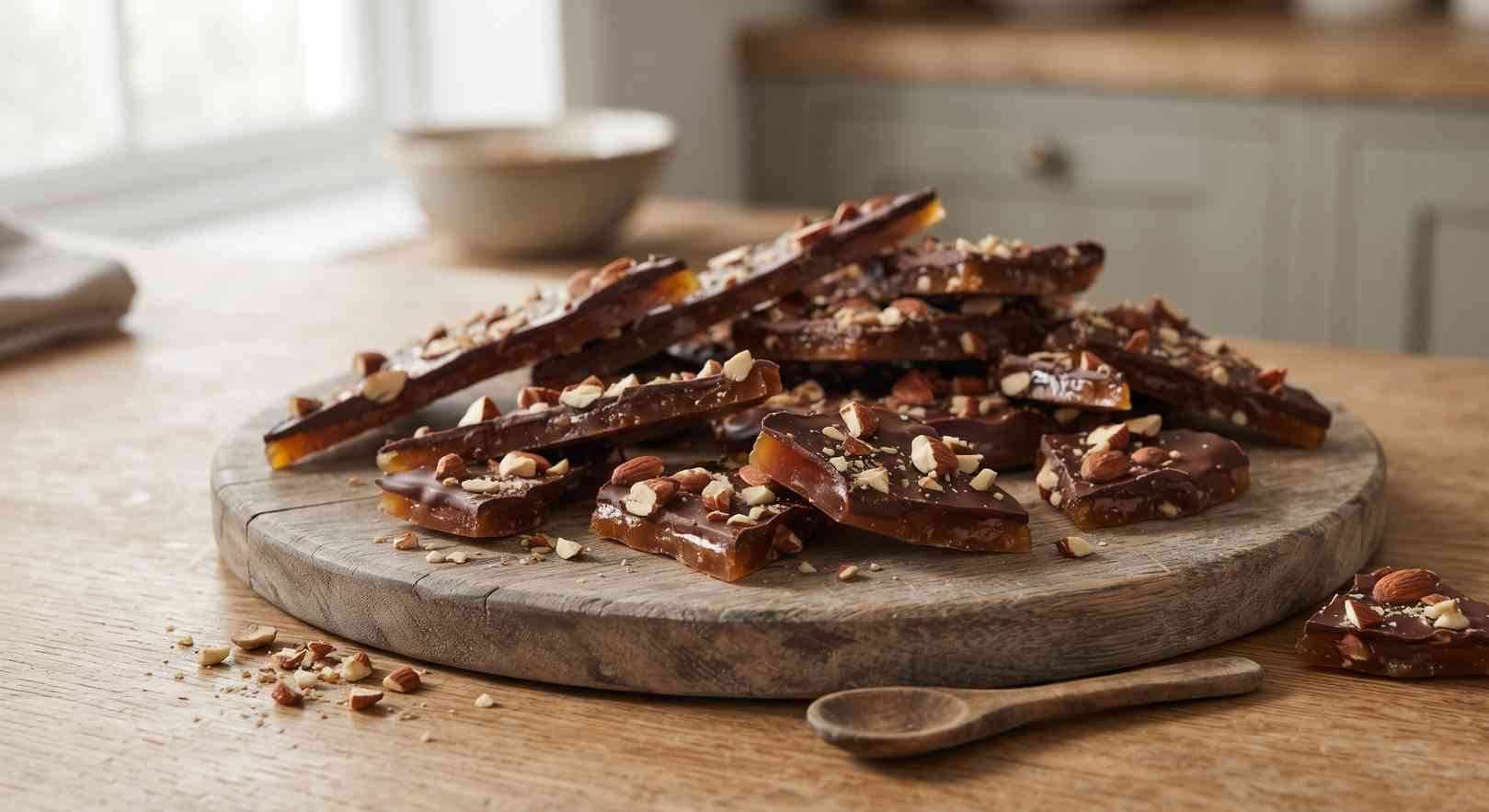
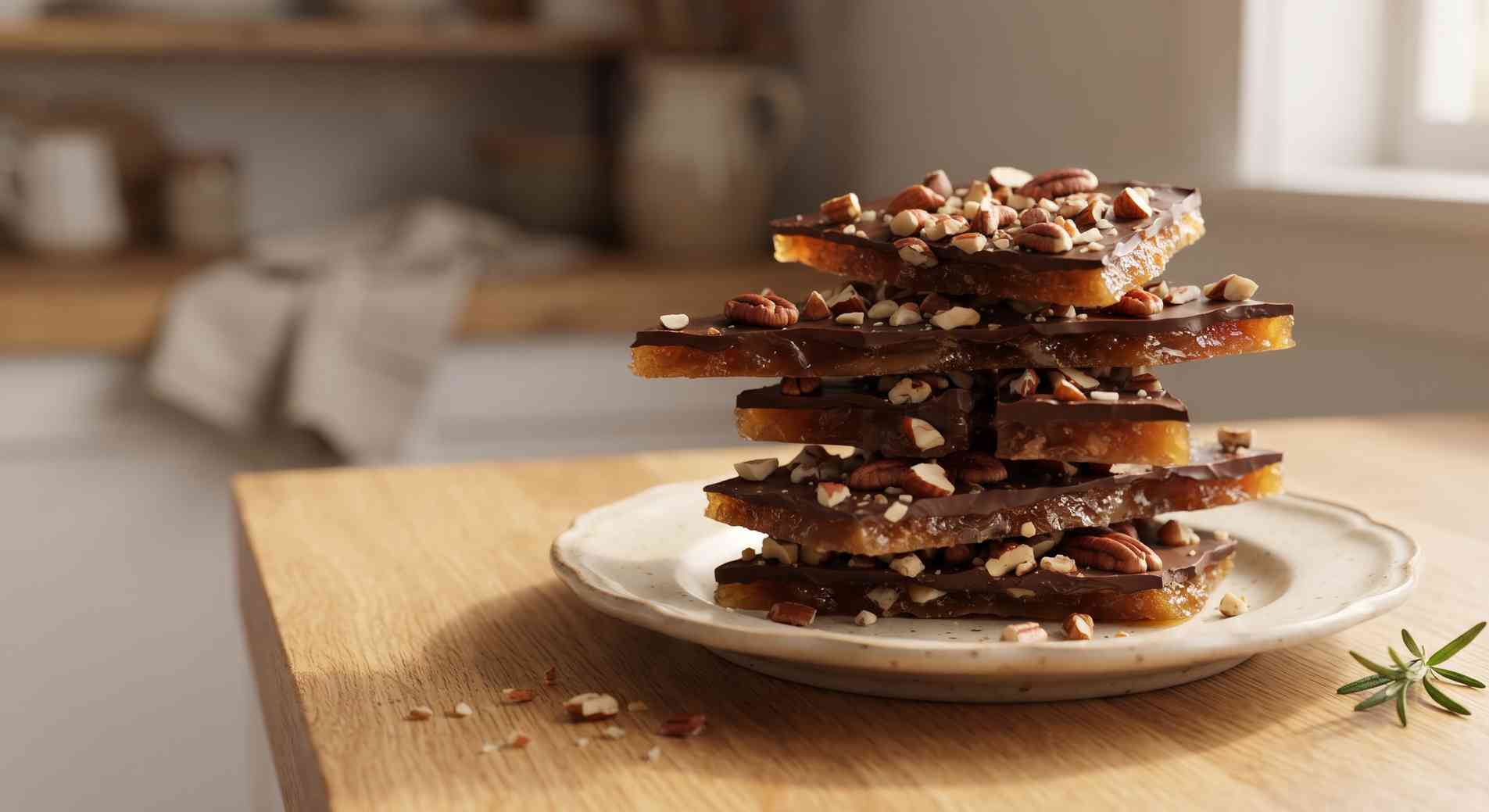
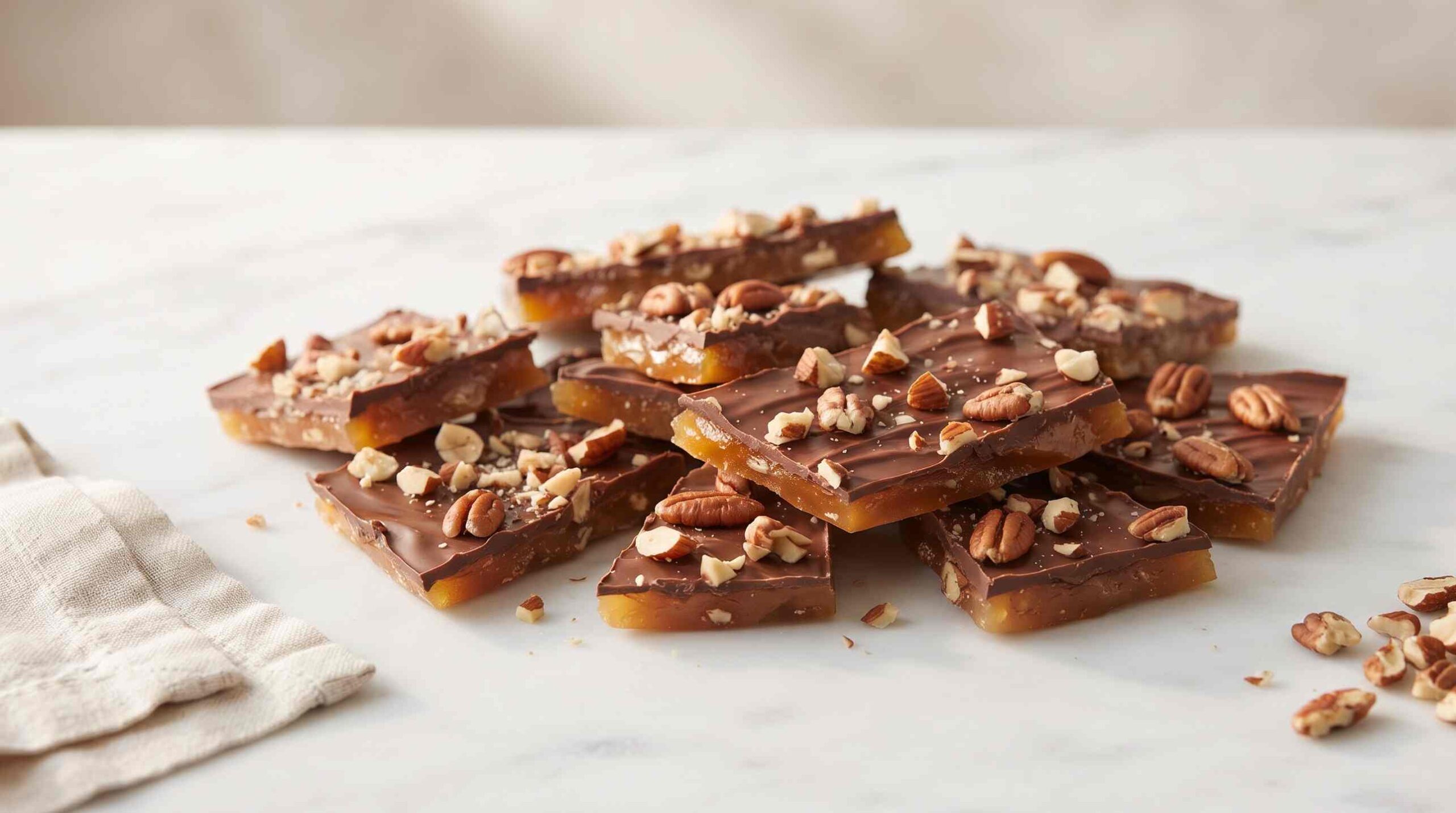
There’s a reason homemade toffee shows up on every holiday candy tray — it looks fancy, it tastes like a candy shop treat, and it’s actually one of the simplest things you can make with a pot and a spoon. This english toffee recipe uses just butter, sugar, chocolate, and nuts, and once you know the two or three things that actually matter, it comes out right every single time.
I used to think toffee was one of those recipes that only worked for other people. Turns out most toffee trouble comes down to heat and stirring, not luck. Get those right and you will have crunchy, buttery toffee you can wrap up for neighbors, teachers, and anyone who has ever said “you made this?”
This one skips the fuss. No candy thermometer drama, no fancy equipment, just a heavy pot and a little patience while the sugar does its thing.

Why You’ll Love This Recipe
- Only five ingredients and one pot to clean
- Buttery, crunchy candy texture with a shattering snap
- Keeps well for weeks, so it is perfect for make-ahead holiday gifting
- No candy thermometer required once you know the visual cues
- Easy to customize with pecans, almonds, or walnuts on top
- Freezes beautifully if you want to make a big batch ahead of time
Ingredients
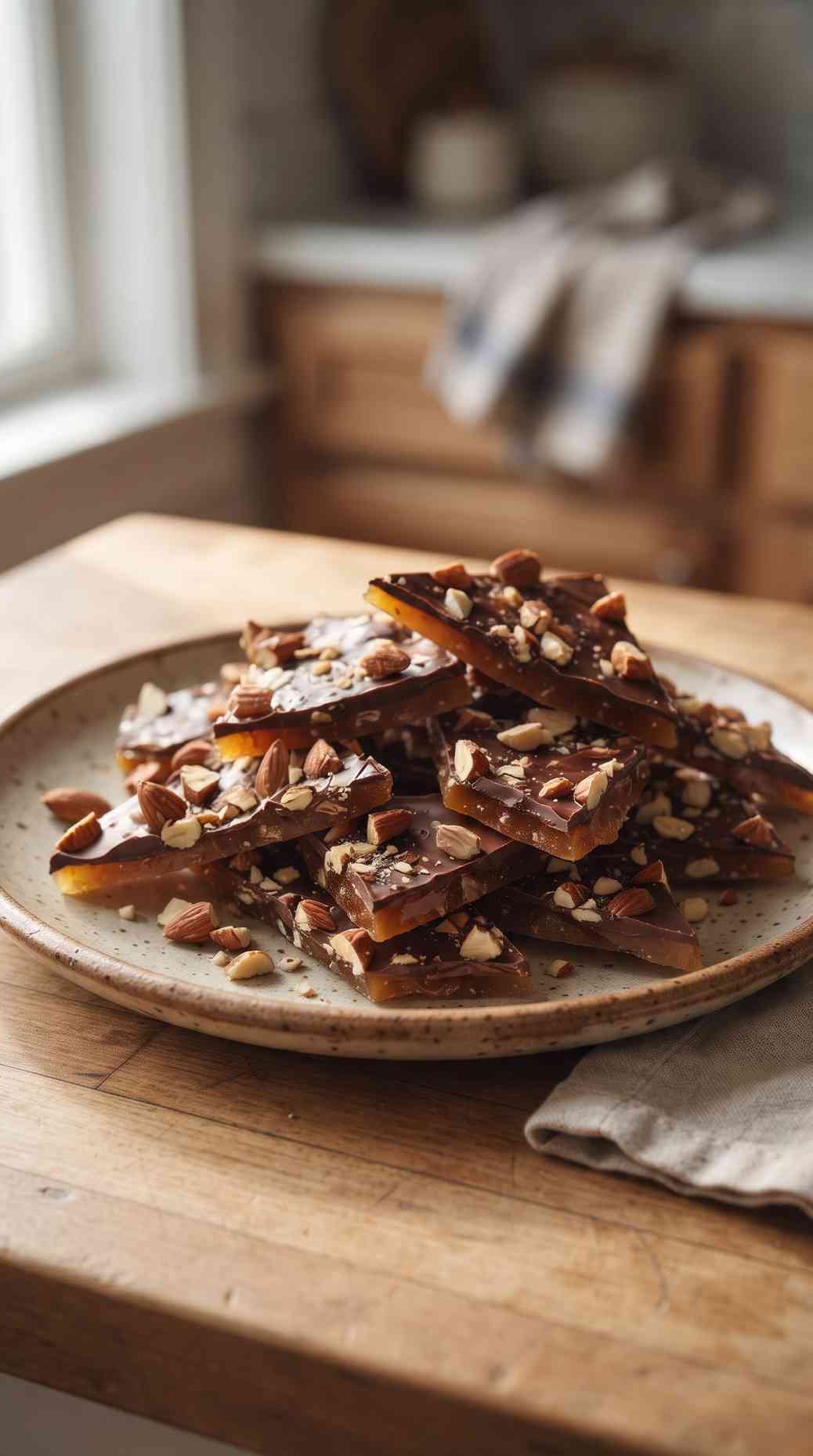
- 1 cup (2 sticks) unsalted butter — use real butter, not margarine; margarine’s higher water content is a common reason toffee separates into a greasy puddle instead of staying smooth
- 1 ½ cups granulated sugar
- 2 tbsp water
- ¼ tsp salt
- 1 tsp vanilla extract
- 1 cup semisweet chocolate chips
- 1 cup chopped almonds or pecans, toasted
Step-by-Step Instructions
Step 1: Melt the Butter and Sugar Together
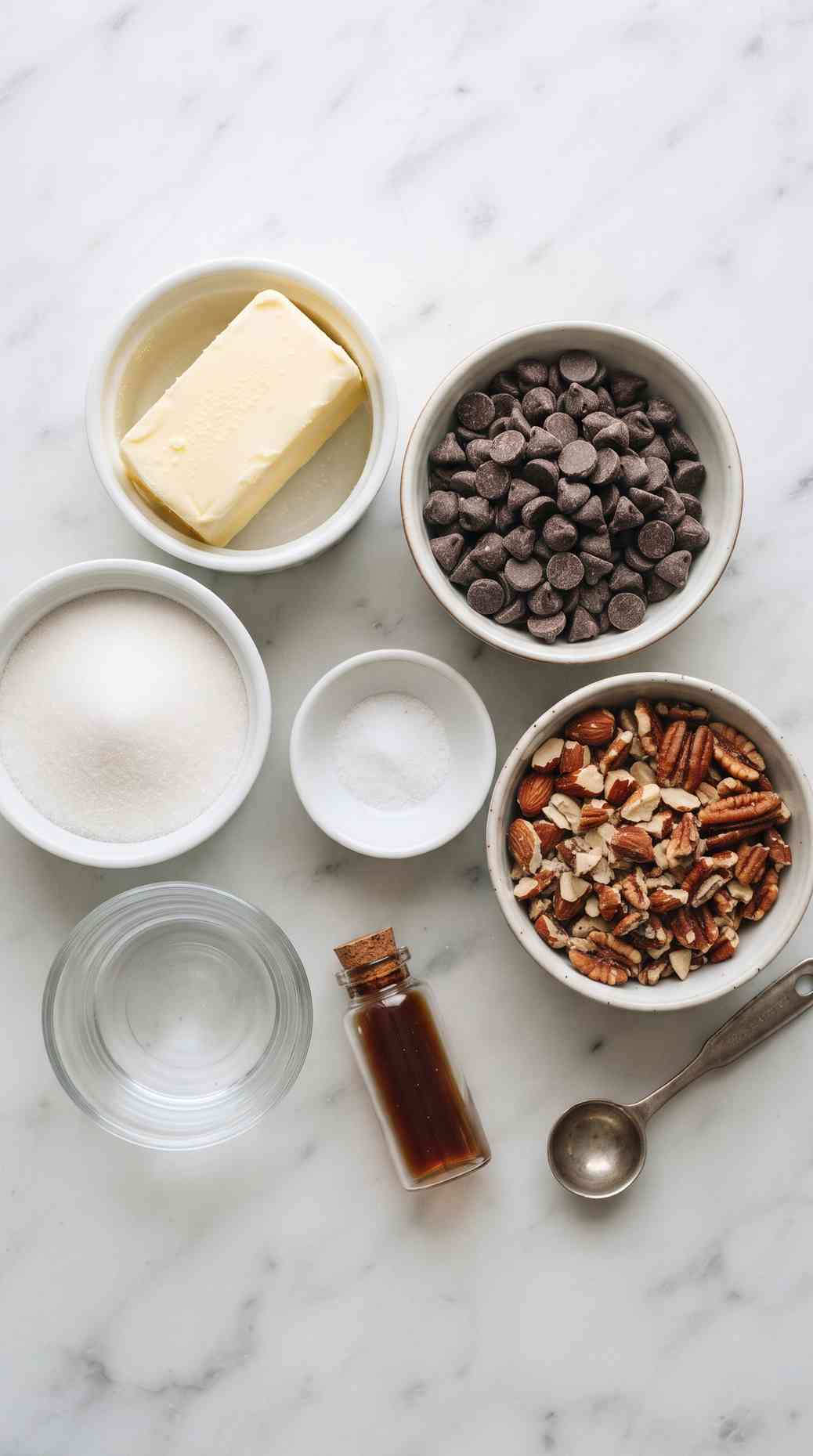
Add the butter, sugar, water, and salt to a heavy-bottomed saucepan over medium heat. Stir gently and constantly until the butter melts and the sugar fully dissolves — you shouldn’t feel any grit on the bottom of the pan when you drag the spoon through it. This is worth doing slowly; rushing this part is where graininess usually starts.
Step 2: Bring It to a Boil, Then Watch the Crystals
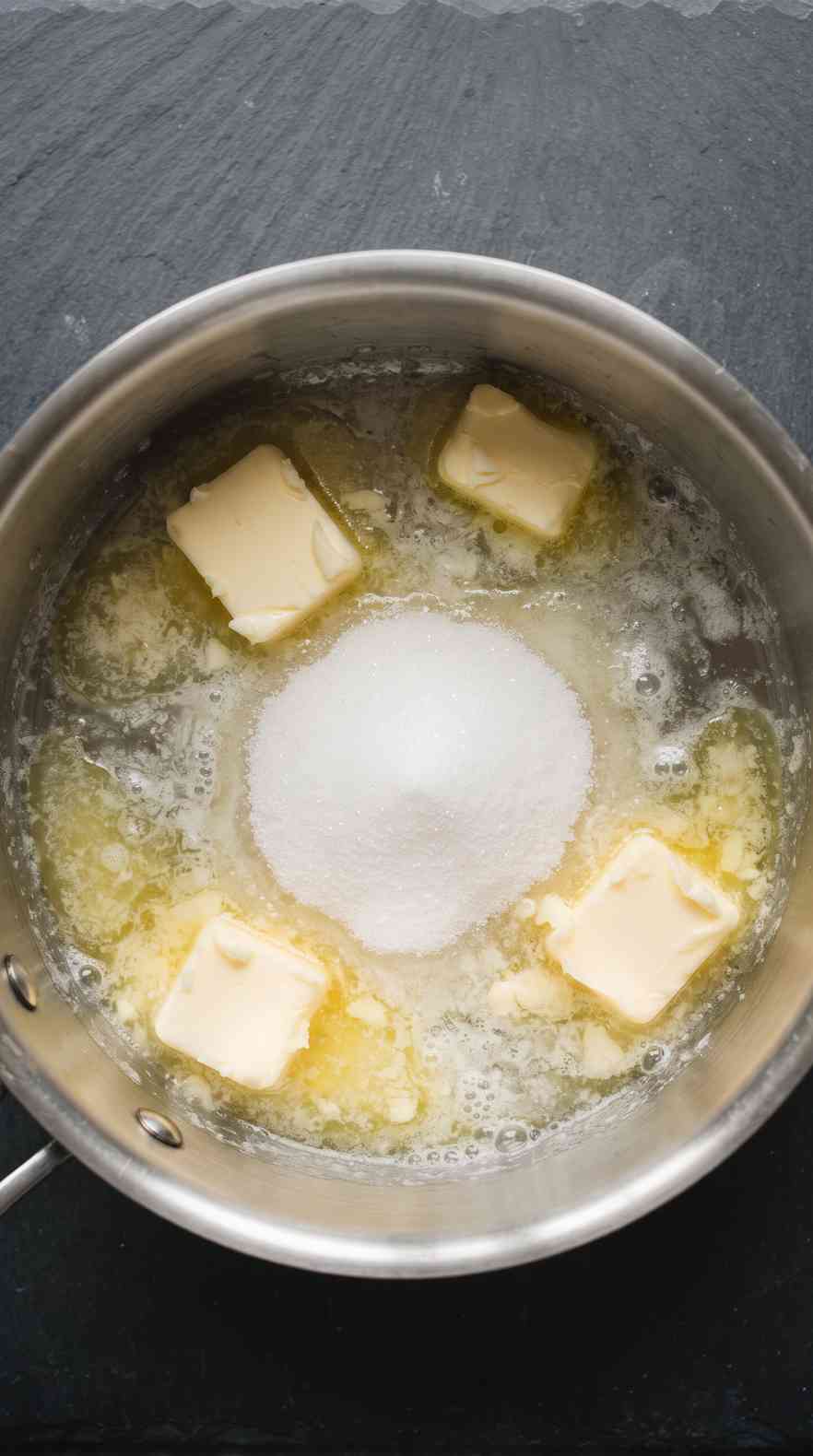
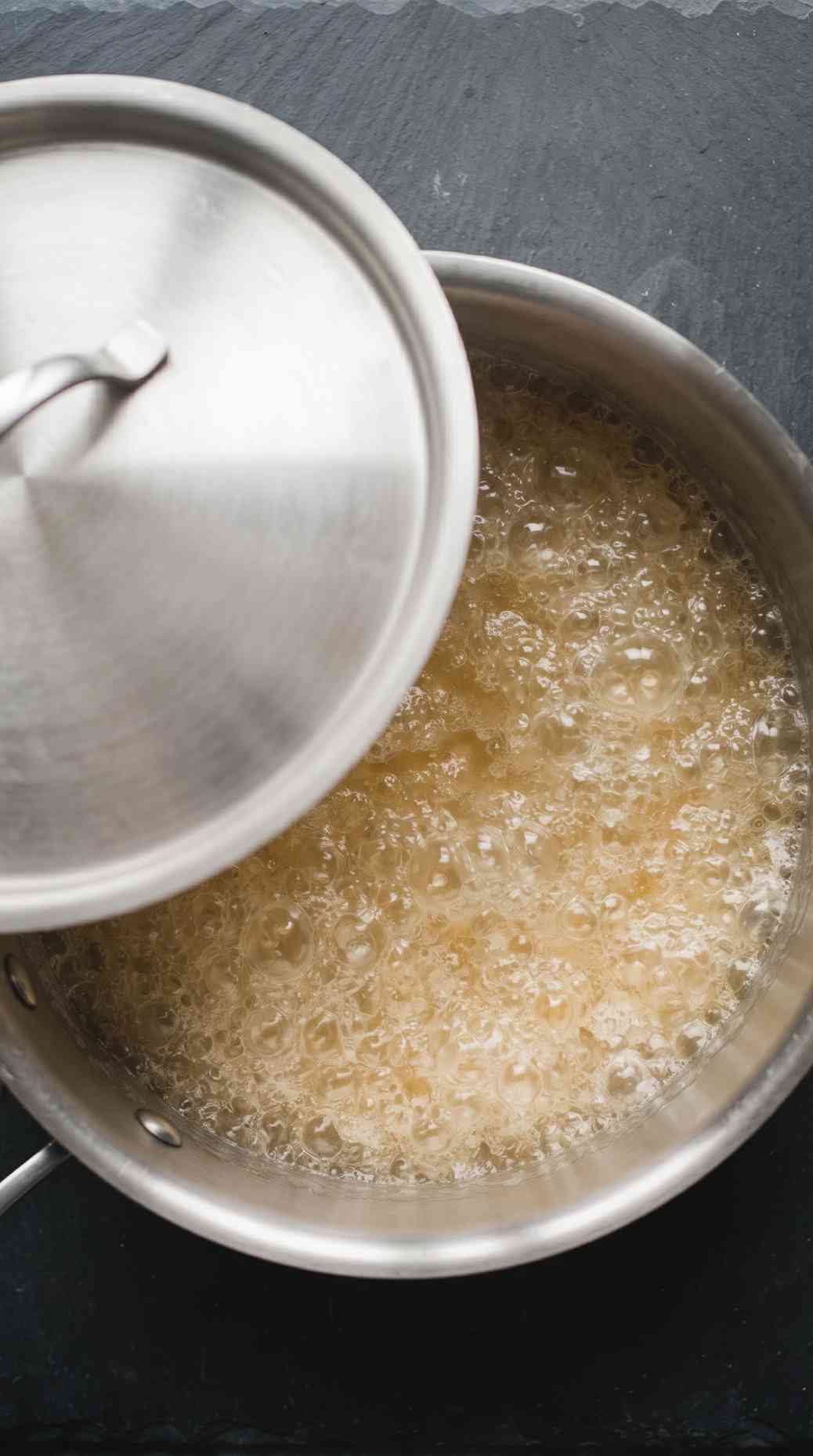
Once everything is melted, let the mixture come to a boil. For the first minute or two, resist stirring too much — if the pan has a lid, set it on loosely for about a minute so the condensation washes any stray sugar crystals down the sides. This small step is the difference between smooth, glassy toffee and a grainy, sugared batch.
Step 3: Cook to Hard Crack Stage (About 300°F)
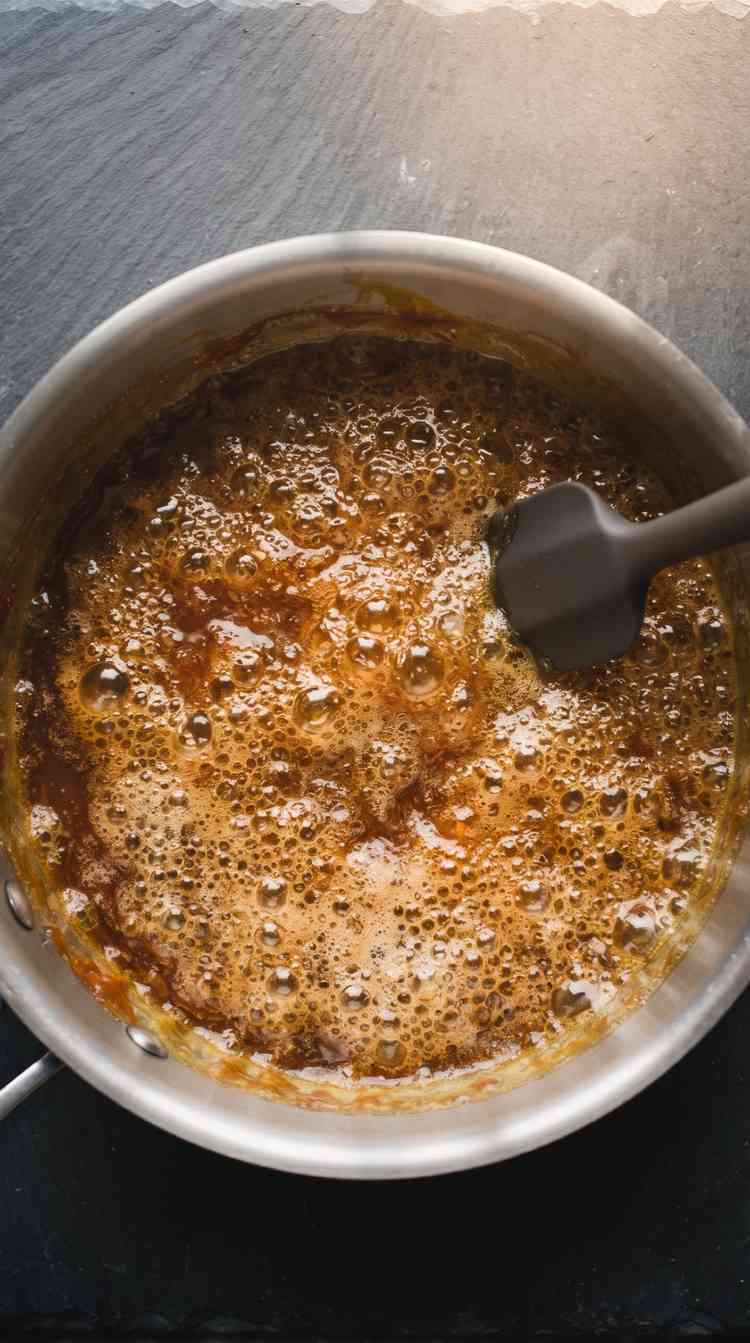
Keep cooking, stirring occasionally now, until the mixture turns a deep amber color, around 300°F if you are using a thermometer. If you don’t have one, drop a bit into a cup of cold water — it should harden instantly into a brittle thread. Toffee that’s pulled too early, anywhere under about 270°F, stays soft and chewy instead of setting into a crisp candy, so when in doubt, give it another minute.
Step 4: Pour and Let It Set
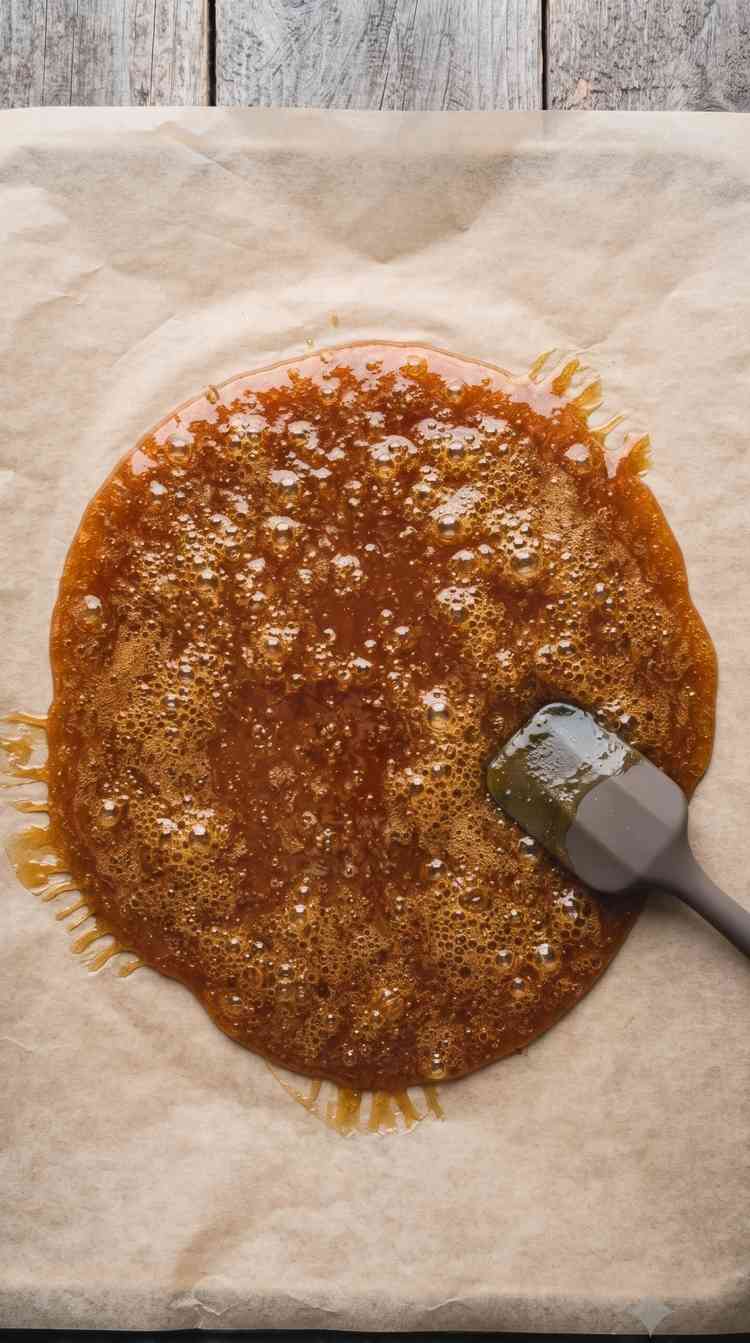
Pour the hot toffee onto a parchment-lined baking sheet and spread it into an even layer with a heatproof spatula. Don’t scrape the pan too hard — just let the toffee settle on its own into roughly a ¼-inch layer. Let it cool at room temperature for about 10 minutes.
Step 5: Add the Chocolate
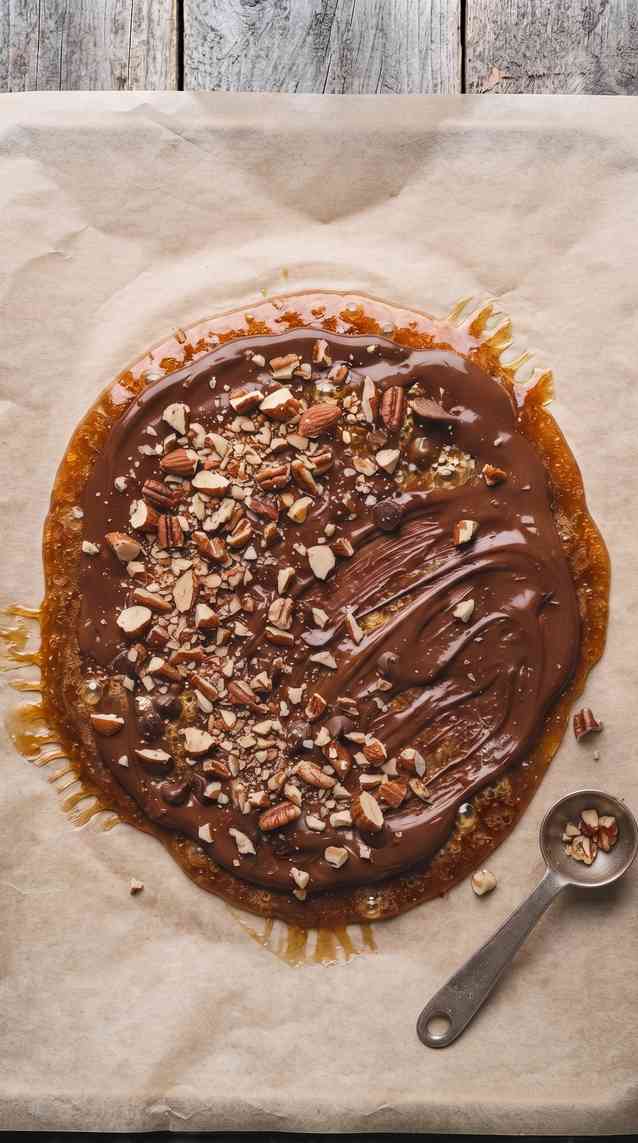
Sprinkle the chocolate chips evenly over the warm toffee while it still has some heat left — the toffee’s warmth will melt the chips so you can spread them into a smooth layer. If the toffee surface looks shiny or oily rather than matte when you pour it, let it cool a few extra minutes first; chocolate struggles to stick to a greasy surface, and that is usually a sign a little butter separated out during cooking.

Step 6: Top with Nuts and Chill
Scatter the toasted nuts over the melted chocolate and press them in gently. Refrigerate for about 1 hour, or until the chocolate is fully set, then break the slab into pieces by hand or with the back of a knife.
Tips for the Best Results
- If the butter separates into an oily layer while cooking, don’t panic — carefully drain or spoon off the excess oil before pouring, and keep going. The flavor will be slightly less rich, but the batch is still salvageable.
- Make candy on a dry day if you can. Humidity in the air can interfere with how the sugar sets, which is part of why toffee behaves differently in summer than in winter.
- Toast the nuts first (5 minutes in a dry skillet or 350°F oven) — it makes a noticeable difference in flavor compared to raw nuts.


English Toffee
Ingredients
Method
- Add the butter, sugar, water, and salt to a heavy-bottomed saucepan over medium heat. Stir gently and constantly until the butter melts and the sugar fully dissolves, you shouldn’t feel any grit on the bottom of the pan when you drag the spoon through it.
- Once everything is melted, let the mixture come to a boil. For the first minute or two, resist stirring too much, if the pan has a lid, set it on loosely for about a minute so the condensation washes any stray sugar crystals down the sides.
- Keep cooking, stirring occasionally now, until the mixture turns a deep amber color, around 300°F if you are using a thermometer. If you don’t have one, drop a bit into a cup of cold water, it should harden instantly into a brittle thread.
- Pour the hot toffee onto a parchment-lined baking sheet and spread it into an even layer with a heatproof spatula. Let it cool at room temperature for about 10 minutes.
- Sprinkle the chocolate chips evenly over the warm toffee while it still has some heat left, the toffee’s warmth will melt the chips so you can spread them into a smooth layer.
- Scatter the toasted nuts over the melted chocolate and press them in gently. Refrigerate for about 1 hour, or until the chocolate is fully set, then break the slab into pieces.
Notes
- Use real butter, not margarine
- If the toffee stays soft, it was likely pulled off the heat before reaching a true hard-crack stage.
- Nutrition is an estimate calculated from the ingredients and will vary with brands and portion size.
Wrap Up This English Toffee for Your Next Gift List
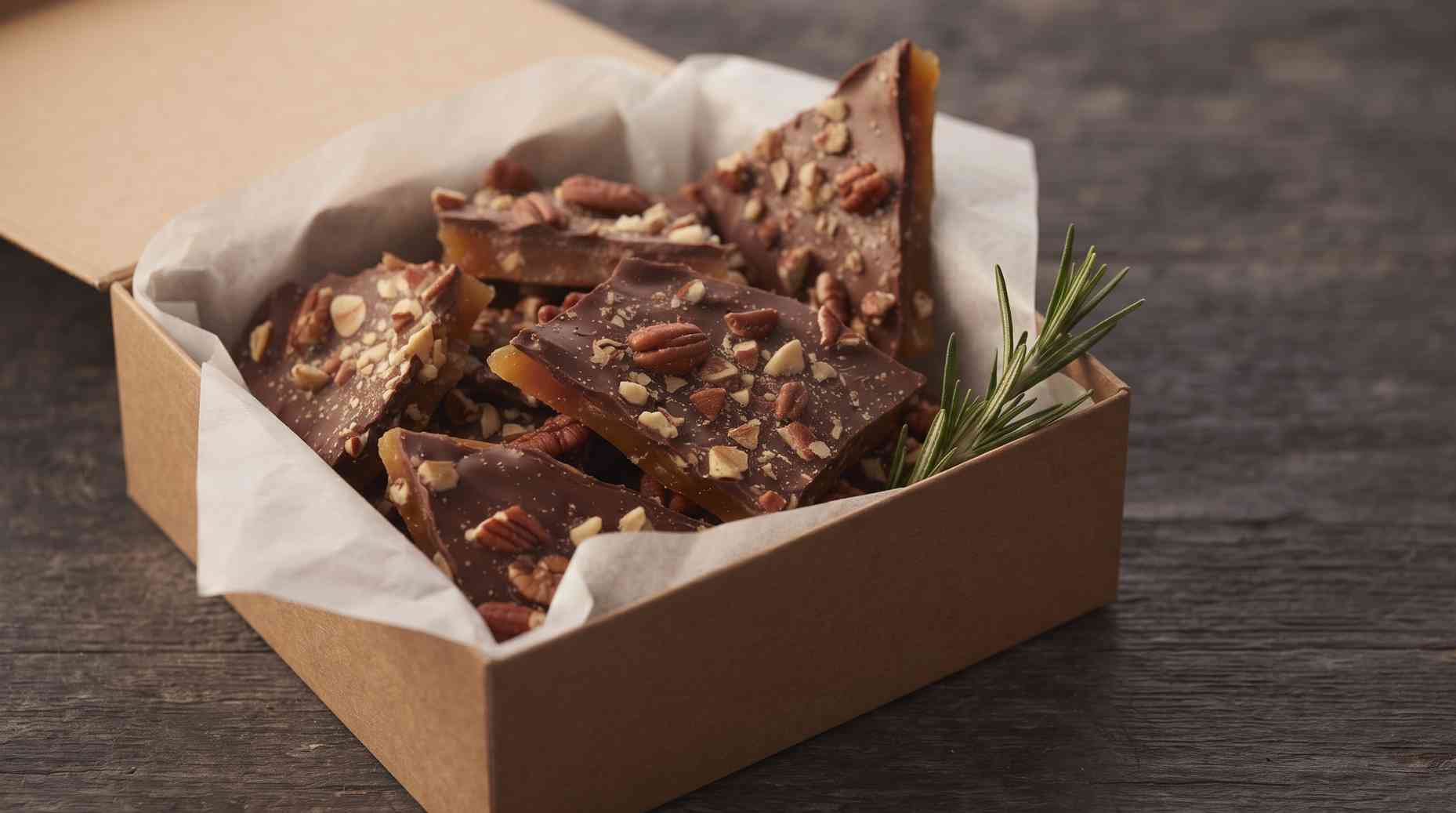
Once you have made a batch of this and watched it disappear in an afternoon, you will understand why it shows up on so many holiday trays. It wraps up beautifully in little cellophane bags or tins, and it holds its crunch for weeks in a sealed container — so there is no reason not to make a double batch.
If your first try comes out a little grainy or soft, don’t give up on it. Candy-making is one of those things that gets easier the second time, once you’ve seen what the right stage actually looks like in your own pot.
If you give this a try, I would love it if you left a star rating and a quick note below on how it turned out for you!
For more candy recipes you will love: